

Interest in AI tools for coding has soared, with Cursor AI earning significant attention among developers and technology enthusiasts. Many are eager to discover which large language models (LLMs) drive this advanced AI code editor. Understanding the models behind Cursor AI sheds light on its remarkable capabilities and highlights its growing impact within the software development community.
Examining the backbone of Cursor AI
The strength of any AI assistant used for programming depends heavily on a powerful llm model. Cursor AI stands out by integrating a variety of advanced coding models, bringing both versatility and high performance that surpass typical editors. Features like the autonomy slider allow professionals to control the degree of independent code generation, demonstrating how central these models are to personalizing workflows.
Whether working on debugging, generating documentation, or providing code suggestions, having leading llm models at the core ensures efficiency throughout the process. The demand for robust encoding and decoding pushes these LLMs to deliver results that impress even experienced programmers.
Which llm models can Cursor AI leverage?
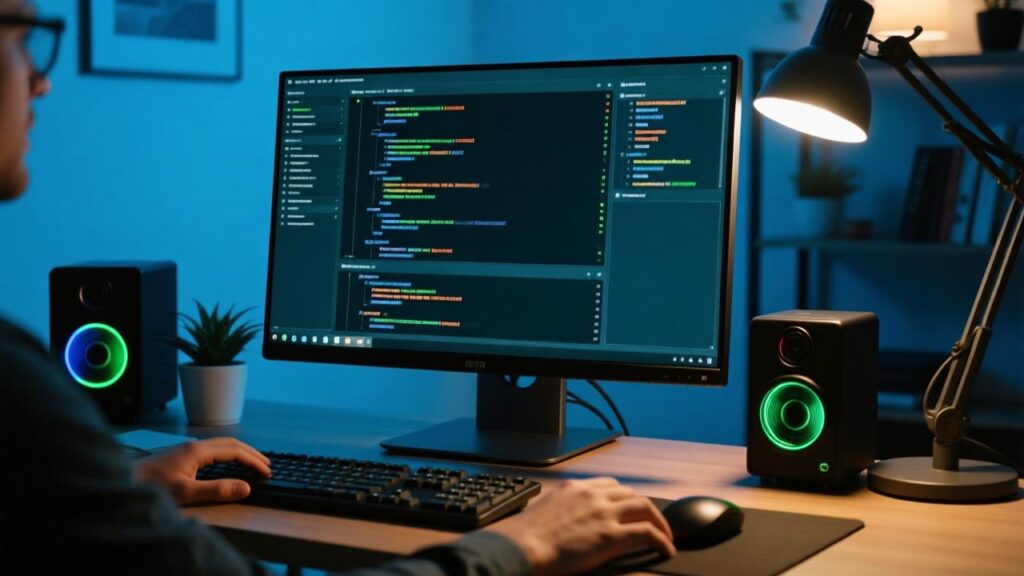
Looking closer, several prominent llm models have become part of Cursor AI’s toolkit. As advancements accelerate, new models are integrated frequently, yet certain names currently define the user experience. A key advantage is the flexibility to choose from different model providers, allowing rapid adaptation as newer versions appear.
In some configurations, options for local llms are available, offering enhanced privacy and control—especially valuable for sensitive projects or when operating within onsite infrastructure. The ability to switch between models provides optimal speed and accuracy, ensuring each workflow is both tailored and reliable.
How does the autonomy slider affect model use?
A standout feature, the autonomy slider, enables professionals to set their preferred balance between manual input and automated assistance. Adjusting this slider communicates directly with the underlying llm models, determining whether they should offer simple suggestions or generate entire functions autonomously. This customizable approach supports hands-on creativity while leveraging the strengths of AI-driven support, making the interface adaptable for every skill level.
For those newer to coding, increasing autonomy may accelerate learning, whereas experts can fine-tune engagement for nuanced or experimental work. The autonomy slider thus creates a unique, personalized journey through the possibilities offered by sophisticated coding models.
Model providers supporting Cursor AI
Cursor AI distinguishes itself through transparency about supported model providers. These range from cloud-based public solutions to locally hosted alternatives. Some prefer connecting to external providers for the latest features, including updates such as claude 3.5 or gemini. Others benefit from keeping all operations local with local llms, a choice often driven by project sensitivity or specific infrastructure needs.
This flexible integration strategy allows Cursor AI to remain current with emerging llm models, ensuring future-proof operation as the field evolves. Seamless switching among models—including o1-preview and upcoming releases—ensures competitiveness without limiting user preference or adaptability.
Spotlight on emerging llm models in Cursor AI
Cursor AI’s success relies on quickly integrating advances in llm models. The recent addition of innovative coding models has significantly improved code comprehension, completion speed, and context awareness. With frequent updates, models like claude 3.7 and the anticipated o1-preview continue to raise standards, benefiting everything from Python scripting to complex frontend logic.
Ongoing evaluation of new models is standard practice. Professionals using an ai code editor powered by evolving LLMs notice better language understanding and more effective code refactoring. New features typically debut when a breakthrough model demonstrates superior real-world performance.
Comparing popular models: performance and specialties
Each coding model within Cursor AI offers unique advantages. Some excel at identifying patterns in legacy code, others focus on generating clear documentation or translating across frameworks. Evaluations consider aspects such as error detection, bug resolution, and maintaining context across files or repositories.
- claude 3.5 specializes in cross-document analysis and interpreting detailed comments.
- o1-preview stands out for fast response times, ideal for rapid editing sessions.
- gemini offers strong capabilities in code rewriting and style consistency across large projects.
These varied strengths enable professionals to select the best fit for each project or individual preference. The table below highlights the specialty areas of each model:
| Model Name | Main Strengths | Ideal Use Case |
|---|---|---|
| claude 3.5 | Cross-document analysis, detailed comment insight | Large-scale backend systems, collaborative teams |
| o1-preview | Fast completions, responsive adaptation | Live coding sessions, real-time prototyping |
| gemini | Consistent code formatting, semantic rewriting | Migrating codebases, legacy upgrades |
Role of local llms within advanced code editors
Although cloud-powered models receive much recognition, local llms hold significant value in many scenarios. Their main benefits include reduced latency, heightened privacy, and uninterrupted access—an excellent solution for offline work or highly confidential client projects.
Programming professionals appreciate the combination of raw computing power and granular control; local deployments are particularly well-suited for situations demanding strict confidentiality. Additionally, self-managed infrastructure allows for specialized adjustments, making ai code editor solutions that support seamless toggling between local and remote llm models especially appealing.
What makes Cursor AI’s llm strategy unique?
Cursor AI is recognized for its transparent approach to integrated llm models and for granting users direct influence over their coding assistants. From the versatile autonomy slider to compatibility with top-tier model providers, nearly every aspect focuses on offering the right blend of automation and custom control for all types of developers.
This philosophy encourages exploration and flexibility. Professionals alternate between claude 3.7 for collaboration-focused work and o1-preview for urgent delivery demands. The resulting environment supports productivity, continuous learning, and collective improvements in codebase quality.
Key questions about llm models in Cursor AI
Can Cursor AI operate offline using local llms?
Yes, it is possible to configure local llms for offline operation within Cursor AI. This setup allows uninterrupted work without network connectivity, preserving complete privacy. Many appreciate the consistent performance of local models and the assurance of secure development environments.
- No data leaves the device during code processing.
- Performance remains stable regardless of external server status.
- Easier customization for proprietary or niche programming languages.
What is the purpose of the autonomy slider in Cursor AI?
The autonomy slider determines how much freedom the llm models have in suggesting or auto-completing code. Moving toward higher autonomy prompts bolder suggestions, while lower settings encourage a more reserved approach. This flexibility accommodates various skill levels and project needs, letting professionals maintain creative control or rely on quick AI-generated templates as desired.
- Full manual mode: Minimal AI involvement, with most coding done by the user.
- Balanced mode: Suggestions provided, with final approval required.
- Autonomous mode: AI generates longer and more complex code segments confidently.
Are different model providers available within Cursor AI?
Cursor AI’s structure grants access to numerous model providers, enabling the use of diverse coding models. Selections adapt according to the latest developments and user preferences. This agile approach keeps functionality ahead of industry trends, welcoming high-performing releases such as claude 3.5 and experimental previews like o1-preview.
| Provider Type | Advantages |
|---|---|
| Cloud-based | Access to the latest models and broad language coverage |
| Local | Enhanced privacy and extensive customization options |
Does Cursor AI automatically switch between llm models?
Switching between llm models within Cursor AI generally requires user initiation. While Cursor AI may suggest optimal models based on the project type or detected languages, users retain full control over the final selection. This user-centric design maintains transparency and enables careful monitoring of model performance across diverse tasks.
- Intuitive interface for toggling models.
- Option to set a default model for recurring workflows.
