
Discovering how to open the terminal in cursor can significantly enhance workflow and overall coding productivity. The integrated terminal in cursor enables seamless management of commands, project launches, or script execution—directly within the editor interface. This convenience minimizes task switching and helps maintain focus during development sessions. This comprehensive guide details several straightforward ways to use, access, and maximize the terminal environment within the cursor editor.
Whether the preference is for keyboard shortcuts, menu navigation, or launching directly from the command line, there is an approach suited to every working style. The following sections offer clear instructions and practical tips for making the most of the terminal assistant experience.
Getting started with the integrated terminal in cursor
The built-in terminal lies at the heart of efficient project management workflows. Unlike external terminals, this integrated solution anchors itself inside the workspace layout, keeping all essential tools just beneath the code area.
Such integration allows automation of repetitive tasks, installation of dependencies, and execution of scripts using familiar terminal commands in cursor. To begin, it is important to identify which method best matches individual habits and technical needs.
Access methods: how to open terminal in cursor?
Multiple options exist for accessing the terminal in the editor, each tailored to different preferences. Exploring these alternatives makes it simple to select the option that best supports daily workflow requirements.
Below are both traditional and modern approaches for opening a new terminal in cursor.
Using keyboard shortcuts for instant access
A commonly used method to open terminal in cursor involves learning a dedicated keyboard shortcut to open terminal. These shortcuts provide a speed advantage, especially during periods of intense development.
Typically, pressing Ctrl+` (the backtick symbol) will quickly toggle the integrated terminal in cursor. For those frequently engaging with shell environments, building muscle memory for this shortcut proves invaluable over time.
Opening via the menu bar or view panel
Some users prefer navigating through menus rather than relying on shortcuts. The top menu bar offers a straightforward route: choose the “View” menu, then select “Terminal.” This open terminal via menu/view > terminal approach ensures even newcomers can initiate a terminal session without difficulty.
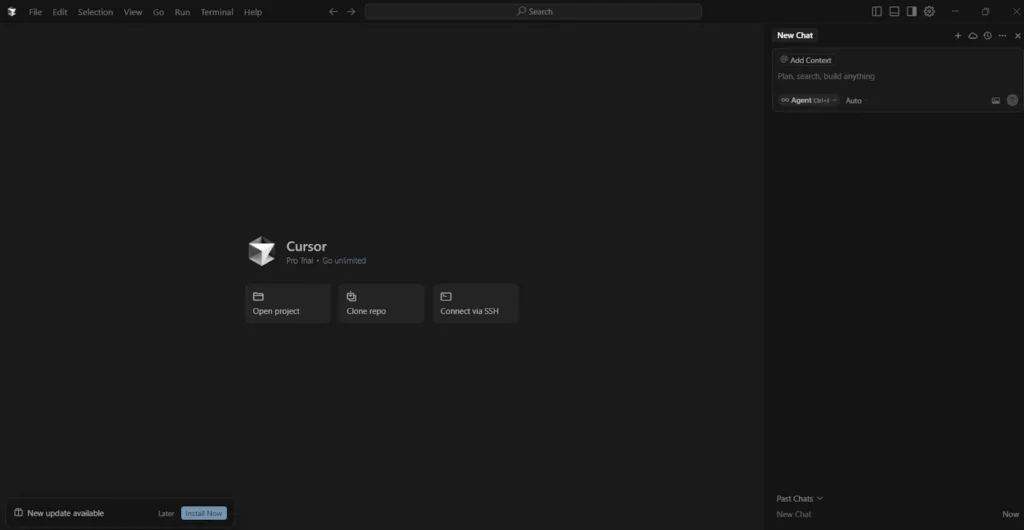
For those who favor visual cues, another popular method involves clicking the bottom panel icon to open terminal. Locate the icon resembling a command prompt or terminal window along the lower edge of the interface. With a single click, immediate access to the terminal is granted.
Launching the editor and terminal from a command line
Many developers appreciate smooth transitions between the system shell and the editor. This section explains how to launch both the editor and its terminal straight from external consoles.
For individuals working outside the graphical interface, it is possible to open cursor editor from terminal/command line. This method preserves context and leverages the full power of the system shell.
Command to open cursor from terminal
A straightforward command brings the editor interface into focus while enabling subsequent use of the terminal assistant within. Typing a shell command such as cursor . (for the current directory) typically initializes the workspace. Adjustments may be necessary based on custom installation paths or configurations.
Once the workspace is loaded, using the previously mentioned shortcut immediately reveals the integrated terminal, streamlining any project setup process.
Opening a new terminal within an active session
After launching the editor, multiple terminal windows may sometimes be needed. Right-clicking inside the existing terminal area displays an “Open New Terminal” option. Alternatively, repeating the keyboard shortcut to open terminal creates additional instances.
Each session remains independent, supporting parallel processes, server instances, or script executions—all running side by side without interference.
Performing actions with terminal commands in cursor
Gaining proficiency with everyday terminal commands in cursor accelerates activities ranging from version control to package management. Installing libraries with pip or npm, executing build tasks, and managing files become smooth and efficient experiences.
Common use cases include:
- Running shell scripts directly in the integrated terminal
- Cloning repositories using
git clone - Monitoring applications with log or tail commands
- Automating unit tests or deployment steps
Refining workflow with terminal assistant tools helps streamline repetitive operations and minimize errors.
Some advanced editors also offer AI-powered terminal assistant capabilities, providing intelligent suggestions or real-time explanations for terminal errors.
Comparing access methods and useful shortcuts
Different access routes suit different scenarios. Some rely on rapid keystrokes, others utilize the graphical menu system, and many combine both for maximum productivity.
The table below summarizes key features of each method for opening the integrated terminal in cursor.
| Method | Action | Best suited for |
|---|---|---|
| Keyboard Shortcut | Press Ctrl+` or assigned combo | Experienced users, rapid toggling |
| Menu/View Option | Navigate View > Terminal | Beginner/intermediate, visual navigation |
| Bottom Panel Icon | Click terminal/status icon | Mouse-driven workflows |
| Open from Command Line | Type cursor . | Console power-users |
Frequently asked questions about using the terminal in cursor
What is the fastest keyboard shortcut to open terminal in cursor?
In most setups, Ctrl+` (backtick) serves as the default keyboard shortcut to open terminal. Certain platforms allow customization of this shortcut for even quicker access, depending on user preference.
- Check the editor’s preferences for shortcut settings.
- If
Ctrl+`does not work, try alternate combinations.
Can multiple terminals be opened simultaneously in cursor?
Yes, support exists for concurrent terminal sessions. Simply right-click within the terminal area or reapply the keyboard shortcut to open new terminal in cursor. Each instance runs independently, facilitating multitasking.
- Right-click the terminal zone.
- Select “Open New Terminal.”
- Or press the main shortcut again.
How to open cursor editor from terminal/command line?
Opening the editor from the command line simplifies the transition from system-level work to coding. Enter a command such as cursor ., specifying either the current or target folder. Once loaded, activate the integrated terminal as usual—via shortcut or menu.
| Command | Effect |
|---|---|
cursor . | Launches editor in present directory |
cursor path/to/project | Opens editor at specified location |
Are there visual aids to open the integrated terminal in cursor?
Absolutely, visual icons or status bars located on the bottom panel provide quick access to the integrated terminal in cursor. Hovering reveals tooltips to clarify their function. A single click opens a new terminal session, ideal for those who would rather not memorize shortcuts.
- Search for icons resembling a prompt or shell.
- Hover for descriptions before clicking.
